
Software Engineer Bootcamp vs Computer Science Degree: Full 2026 Guide
Updated on June 10, 20266 minutes read
If you want to become a software engineer in 2026, you have two realistic options: a computer science degree or a coding bootcamp. This used to feel like a clearer choice. It does not anymore, and the right answer depends on things specific to you: your timeline, your finances, and which companies you actually want to work for.
This guide compares both paths honestly on cost, time, salary, and where each one falls short.
What You Actually Get From Each Path
A CS degree gives you four years of structured education in algorithms, data structures, operating systems, and mathematics. You graduate with credentials that open doors at companies where a degree is still a hard filter, including large tech firms, financial institutions, and defense contractors.
A software engineer bootcamp runs three to six months. The curriculum is narrow by design: the languages, frameworks, and workflows employers hire for right now. You will not cover theoretical computer science. You will spend the time building things and shipping code.
Neither is a shortcut to the other. A bootcamp graduate and a CS graduate know different things. The question is which set of things matters more for what you are trying to do.
The Cost Gap

A four-year CS degree at a US public university runs between 100,000 in tuition. Add living expenses and the total over four years regularly exceeds $150,000. Private universities are higher still.
A software engineer bootcamp typically costs between 20,000. Many programs offer income share agreements or deferred tuition so you pay after landing a job. That is an order of magnitude less than a degree.
The cost gap matters most if you are a career changer with existing financial obligations. For an 18-year-old with family support and no time pressure, the calculation is different.
Time to First Job
A CS degree is a four-year commitment. During that time you are largely unavailable for full-time work in the field you are training for.
A full-time bootcamp runs 12 to 24 weeks. Add two to six months of job searching and most graduates reach their first engineering role within a year of starting. Part-time options run six to twelve months and let you keep your current job while you study.
For most career changers, time is the real constraint. Four years to switch careers is not realistic for a lot of people. Twelve months often is.
What Employers Actually Think in 2026

This has shifted considerably. Apple, Google, IBM, and Meta have all publicly removed degree requirements from many software engineering roles. In those hiring processes, what matters is a portfolio and the ability to perform in a technical interview.
Some companies still filter by degree before a human sees your resume. Financial services, defense, and enterprise software firms hold onto those requirements longer than startups. If your target employers are in those sectors, the credential still carries real weight.
For most web development and full-stack roles at product companies and startups, a strong portfolio will get you further than a degree from a middling university. Hiring managers in those environments primarily want to know if you can build things.
Salary: Does the Degree Pay Off?
The data here is murkier than either side admits. CS graduates from strong programs do earn more on average, but those averages include top-ten program outcomes that bootcamp graduates are not competing with.
More useful comparison: bootcamp graduates starting in software engineering typically earn between 85,000 per year in the US. CS graduates from state schools land in a similar range. The gap in the first two to three years is smaller than most people assume.
Where a degree pays off is long-term access to roles with higher ceilings: principal engineer, tech lead, senior architecture at companies that still use degrees as a filter for advancement. Ten-year view targeting a FAANG-type company? The degree math is more defensible. First solid engineering job in the next twelve months? The bootcamp math works.
Where a Bootcamp Falls Short
Bootcamps cut things. You will not learn CS theory, and that gap shows in certain interviews. Algorithms and data structures questions, the kind that dominate technical interviews at Google and Amazon, require preparation that most bootcamps do not provide.
Bootcamp graduates can also struggle with debugging complex systems, because they have spent more time learning patterns than understanding what sits underneath. That gap usually closes with experience. But it is real in year one.
The quality variance is also significant. Some programs have strong employer networks and verifiable outcomes. Others will take your money and leave you no more hireable than before. Researching outcomes data before enrolling is not optional.
Where a CS Degree Falls Short
A degree is long and expensive, but the less-discussed problem is that a lot of what it teaches is not what employers want from junior developers. Graduates often know their way around a sorting algorithm but have never deployed an application, used version control on a real project, or worked with a REST API.
Many CS graduates spend their first few months on the job learning what bootcamp graduates covered in training: how to collaborate on a codebase, use modern frameworks, and actually ship software. There is also the opportunity cost. Four years of potential earnings is a real number, and a bootcamp graduate who started working a year earlier is not in an identical position, even with weaker theoretical foundations.
How a Good Bootcamp Changes the Equation
The criticism of bootcamps that actually sticks is this: low-quality programs churn students through a generic curriculum and leave them to figure out the job search alone. That is a real problem, and it explains why outcomes data varies so widely across programs.
A well-designed program builds job-ready skills through projects that reflect real production environments, gets you a portfolio that hiring managers can evaluate, and provides career support throughout the job search rather than cutting contact at graduation.
Code Labs Academy's software engineering program is built around those three things. The curriculum is project-based, portfolio work is reviewed by industry practitioners, and students receive career mentoring and advisor support from enrollment through to their first role.
If you want to see how the program is structured, download the syllabus or talk to an advisor about whether the timeline fits your situation.
Which Path Is Right for You?
If you are 18, have family financial support, want to work at a large tech company, and are not in a hurry, a CS degree is likely the better long-term investment. The theoretical foundations are real and the credential opens specific doors.
If you are a career changer with financial obligations and a goal of getting into software engineering within twelve months, a bootcamp makes more practical sense. Some people do both: a bootcamp to get hired fast, then part-time CS coursework later to fill the theoretical gaps.
Conclusion
Neither a software engineer bootcamp nor a CS degree is the obvious right answer in 2026. The degree builds deeper theoretical knowledge and opens more doors at conservative employers. The bootcamp gets you employed faster at a fraction of the cost. Both paths produce working software engineers.
Be honest about your timeline, your finances, and your target employers. Those three things will tell you more than any comparison article can.
If a bootcamp is the right move, Code Labs Academy's full-stack software engineering program is built around real hiring outcomes: a curriculum designed around what employers hire for, projects that become portfolio pieces, and career support that does not stop when the course ends.
Explore Code Labs Academy's software engineering programs or apply today to speak with an enrollment advisor about your next step.
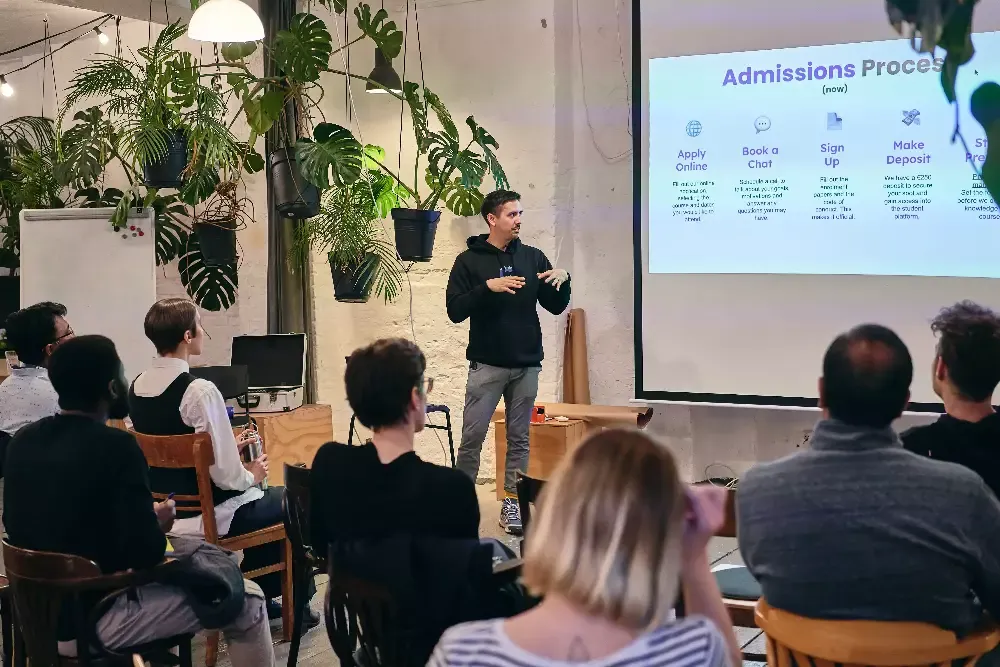
Learn technical skills online with Code Labs Academy
Join our supportive community, unlock your potential, and embark on a rewarding career path.
Apply Now