
New AI Developer Tools Improve Cloud Workflows in Canada
Updated on April 30, 20263 min read
AI developer tools are increasingly reshaping cloud workflows across Canada as major platforms introduce agent-based systems that assist with coding, deployment, and infrastructure management. These tools are shifting development from manual processes toward AI-assisted and partially automated workflows.
For developers and learners, this means faster iteration cycles and more focus on architecture and problem-solving rather than repetitive operational tasks. Recent developments from AWS, Microsoft, and GitHub highlight how quickly this transition is accelerating across the industry.
What happened (facts with dates)
On 28 April 2026, Amazon Web Services announced expanded support for OpenAI models, including Codex, through Amazon Bedrock. This allows developers to run AI coding agents directly within AWS environments, marking a deeper integration between AI model providers and cloud infrastructure.
Microsoft has also continued expanding its AI ecosystem. On 18 November 2025, Azure introduced Copilot agents designed to automate cloud operations such as troubleshooting, migration assistance, and infrastructure optimisation. These agents are part of a broader effort to embed AI into enterprise cloud workflows.
In February 2026, Microsoft developer documentation highlighted tighter integration between GitHub Copilot SDKs and cloud-native systems. This enables multi-agent workflows that can operate across repositories, CI/CD pipelines, and cloud environments, reducing manual coordination between tools.
Why it matters
These changes are significant for developers in Canada because they redefine how cloud applications are built and maintained. Instead of manually managing infrastructure tasks, developers can delegate parts of the workflow to AI agents that assist with coding, debugging, deployment planning, and system monitoring.
For learners and early-career developers, this lowers the barrier to entry in cloud engineering. Training environments increasingly mirror real-world systems where AI assistance is embedded by default. This means students are expected not only to write code but also to understand how to collaborate with AI systems in production-like environments.
For engineering teams, the shift improves speed and consistency. Routine operational tasks can be automated, allowing engineers to focus on system design, scalability, and optimisation.
Key numbers
- Azure operates across more than 70 global regions, supporting AI workloads
- Microsoft cloud infrastructure includes hundreds of datacentres worldwide
- GitHub Copilot has more than 1.3 million paid users globally
- AWS integration with OpenAI Codex introduces large-scale compute capacity via Trainium infrastructure
Context
AI-assisted development tools have evolved rapidly since the early versions of GitHub Copilot launched in 2021 and 2022. At that stage, tools focused primarily on code completion and conversational assistance.
By 2025 and 2026, the industry shifted toward agent-based systems capable of performing multi-step tasks. These systems can now analyse codebases, suggest architectural improvements, deploy applications, and even coordinate across multiple services.
Cloud providers are competing aggressively in this space. Microsoft, AWS, and Google Cloud are all investing in AI-driven infrastructure management tools. Google Cloud has also introduced AI security automation features that detect and respond to threats across cloud environments.
What’s next
The next stage of AI development tools is expected to focus on deeper automation and coordination between agents. Instead of isolated assistants, developers will work with interconnected systems of AI agents handling different parts of the software lifecycle.
Key trends likely to emerge include:
- Standardised protocols for AI agent communication
- Expanded use of multi-agent orchestration in CI/CD pipelines
- More integration between security, development, and operations tools
- Usage-based pricing models for AI compute workloads
For developers, this means learning how to design systems that incorporate AI agents as part of the architecture rather than treating them as optional tools.
How to go deeper
If you want to explore the skills behind these changes, you can start with practical learning paths:
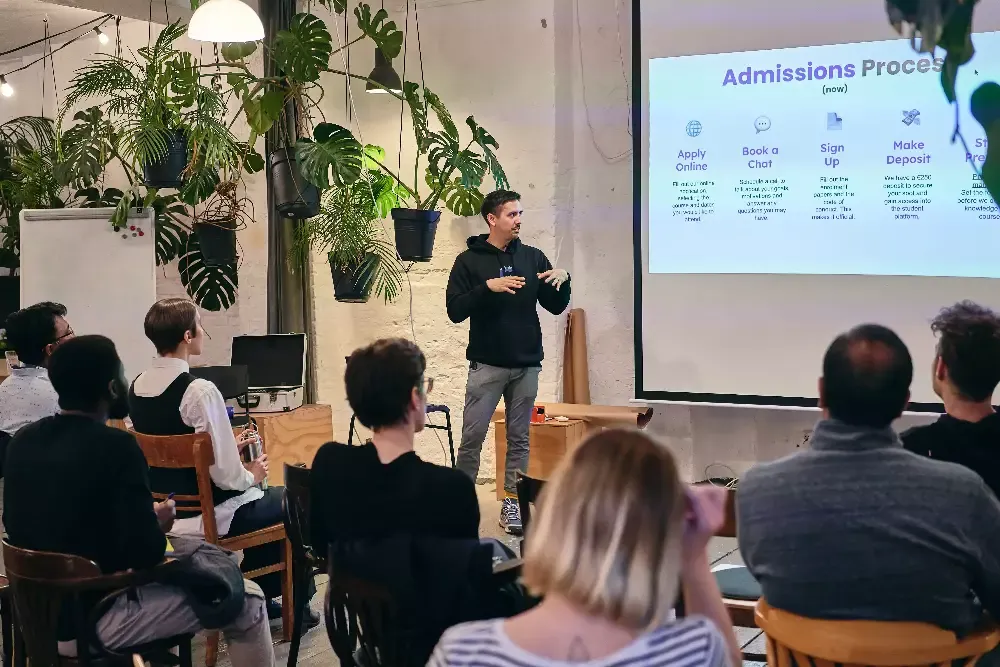
Learn In-Demand Tech Skills Online with Code Labs Academy
Join our supportive online community, upskill in fields like Cybersecurity, Web Development, UX/UI & Product Design and Data Science & AI, and take the next step in your tech career from Canada or anywhere in the world.
Apply Now